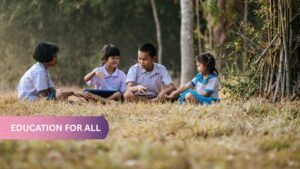
 Education is not just a basic human right — it’s the foundation upon which every society builds its future. For a country as vast and diverse as India, education and literacy are not merely tools of empowerment; they are the driving forces of social, economic, and cultural progress.
Despite being one of the world’s fastest-growing economies, India continues to grapple with unequal access to education. Millions of children and adults, especially in rural and marginalized communities, remain outside the fold of formal learning. Bridging this gap is essential if India is to realize its vision of inclusive growth and sustainable development.
This article explores why literacy is the key to India’s progress, how education transforms lives, and what innovative initiatives — by the government, NGOs, and organizations like True Help Charitable Trust — are paving the way toward Education for All.
1. Understanding Literacy and Its Broader Meaning
Literacy goes far beyond the ability to read and write. In today’s world, being literate means having the skills to think critically, make informed decisions, use technology effectively, and contribute productively to society.
According to UNESCO, literacy is the foundation for lifelong learning and sustainable development. It empowers individuals to improve their quality of life and enables societies to achieve economic growth and stability.
In the Indian context, literacy forms the backbone of development programs — connecting education to employment, equality, and empowerment. The phrase “Education for All” isn’t just a slogan; it represents a national mission to make learning accessible to every child, youth, and adult, regardless of gender, caste, or income level.
2. Education and Literacy: Pillars of National Development
Every developed nation shares one common trait — a highly educated population. Education directly influences every dimension of a country’s growth, from economic productivity to social justice.
Economic Growth and Employment
A literate population is more capable of adopting modern technologies, driving entrepreneurship, and improving productivity. When citizens are educated, they contribute more effectively to industries, agriculture, and services, strengthening the nation’s economy.
Social Equity and Empowerment
Education reduces inequalities. It bridges social divides and empowers marginalized groups — including women, minorities, and rural populations — to stand on equal footing in society. Literacy also plays a vital role in reducing poverty and promoting gender equality.
Civic Participation and Democracy
Educated citizens are more likely to participate in democratic processes, understand their rights, and hold institutions accountable. In this way, education fosters responsible citizenship and strengthens the democratic fabric of the country.
3. The State of Literacy in India
India has made significant strides in improving literacy since independence. According to the 2011 Census, India’s literacy rate was 74%, up from just 12% in 1947. While this marks incredible progress, disparities still exist — especially between urban and rural areas, and between men and women.
Rural and Gender Disparities
Rural literacy rates remain lower than urban ones, largely due to factors like poverty, lack of infrastructure, and cultural barriers. Women, particularly in remote areas, face additional challenges such as early marriage, household responsibilities, and limited mobility.
Bridging this gap requires community-based education initiatives, awareness programs, and government schemes that target vulnerable populations.
4. Government Initiatives for Education and Literacy
The Government of India has launched several programs to ensure access to quality education for all citizens.
Sarva Shiksha Abhiyan (SSA)
Launched in 2001, SSA aimed to universalize elementary education by ensuring that every child aged 6–14 attends school. It improved school infrastructure, teacher training, and access to learning materials.
National Education Policy (NEP) 2020
The NEP 2020 is a landmark reform designed to modernize India’s education system. It emphasizes early childhood education, digital learning, skill development, and holistic teaching methods — making learning more inclusive and future-ready.
Mid-Day Meal Scheme
This program ensures that millions of children receive nutritious meals at school. Beyond improving attendance rates, it addresses malnutrition and keeps students engaged in their studies.
Digital India and SWAYAM
To close the digital divide, initiatives like SWAYAM and e-Pathshala provide free online courses and digital resources, ensuring access to education even in rural and remote regions.
5. The Role of NGOs and Community Trusts
While government programs play a crucial role, the efforts of non-governmental organizations (NGOs) and charitable trusts like True Help Charitable Trust are equally vital in achieving Education for All.
True Help Charitable Trust: Bridging the Gap
Organizations like True Help Charitable Trust focus on delivering education and literacy programs to underprivileged communities. Through initiatives in education, women’s empowerment, health, and skill development, the Trust helps children and adults gain access to essential learning opportunities.
By setting up community learning centers, distributing educational materials, and training teachers, such organizations make a real difference where infrastructure is lacking. Their approach ensures that education is not limited to schools but becomes a lifelong journey of growth and empowerment.
6. Women’s Education: The Multiplier Effect
Educating women has one of the highest returns on investment in development. Studies consistently show that when women are educated, entire communities benefit.
Benefits of Women’s Literacy
-
Educated mothers are more likely to send their children to school.
-
They make better health and nutrition choices for their families.
-
Women’s literacy leads to reduced child mortality and poverty levels.
-
It empowers women to participate in decision-making and leadership roles.
Organizations and initiatives that focus on female education and literacy are driving a social transformation in rural India. Programs like Beti Bachao Beti Padhao and grassroots efforts by NGOs have inspired thousands of women to step beyond traditional roles and become agents of change.
7. Technology and Innovation in Education
In today’s digital era, technology has become a key enabler of literacy and learning. Rural education is being revolutionized through digital classrooms, e-learning platforms, and mobile apps.
E-Learning in Rural India
Smart classrooms and low-cost tablets are helping children in remote villages access quality learning materials. With solar-powered internet solutions, education is reaching places once considered unreachable.
Skill-Based Digital Literacy
Digital literacy programs teach youth and adults how to use technology for banking, communication, and entrepreneurship. This not only enhances employability but also ensures that rural populations remain part of the digital economy.
True Help Charitable Trust and similar organizations are leveraging such innovations to promote inclusive and technology-driven education across India.
8. Challenges Ahead
While progress has been remarkable, several challenges persist:
-
Infrastructure Gaps: Many rural schools still lack proper classrooms, electricity, and sanitation.
-
Quality of Education: Teacher shortages and outdated curricula limit learning outcomes.
-
Dropout Rates: Economic pressures force many children, especially girls, to leave school early.
-
Digital Divide: Unequal access to technology hinders online education in rural areas.
Addressing these issues requires sustained investment, public-private collaboration, and community participation. Education must be seen not as charity but as a strategic priority for national progress.
9. The Way Forward: Building an Educated and Equitable India
To achieve Education for All, India must focus on:
-
Universal Access: Ensuring every child, regardless of gender or location, has access to education.
-
Quality Learning: Improving teacher training, digital tools, and modern teaching methods.
-
Lifelong Literacy: Promoting adult education programs to empower older generations.
-
Community Ownership: Involving parents, local leaders, and NGOs in educational planning.
When these goals align, education becomes more than a system — it becomes a movement that uplifts individuals and strengthens the nation.
Conclusion
Education is the most powerful investment India can make in its people and its future. A literate society fosters innovation, inclusivity, and resilience — qualities that drive sustainable development.
Organizations like True Help Charitable Trust, government programs, and local communities are proving that when education reaches every doorstep, transformation follows.
Education for All isn’t just an aspiration — it’s the key to unlocking India’s full potential. By ensuring that every child and adult has the opportunity to learn, we can build an India that is not only literate but enlightened, equitable, and unstoppable.